3D Explorations
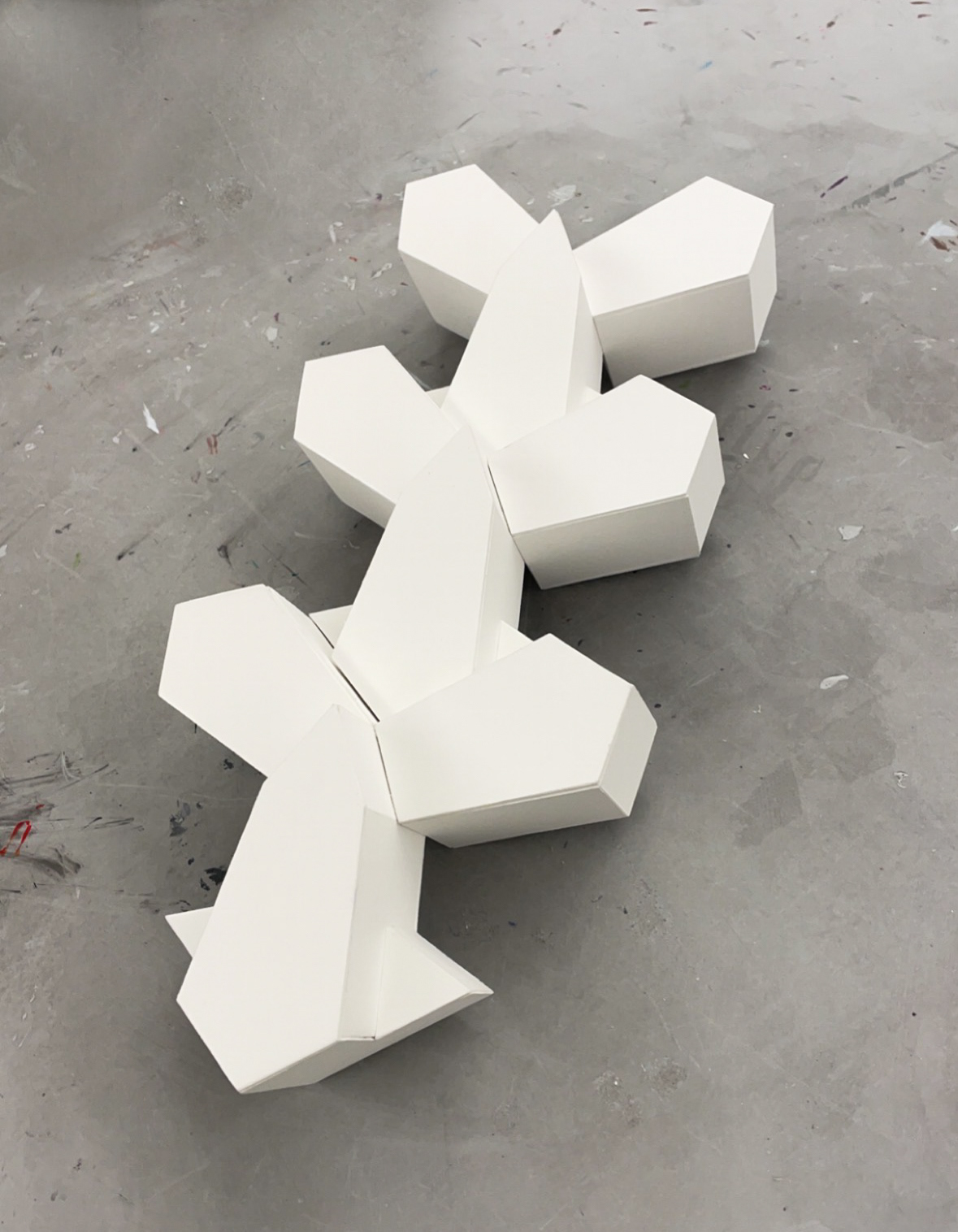
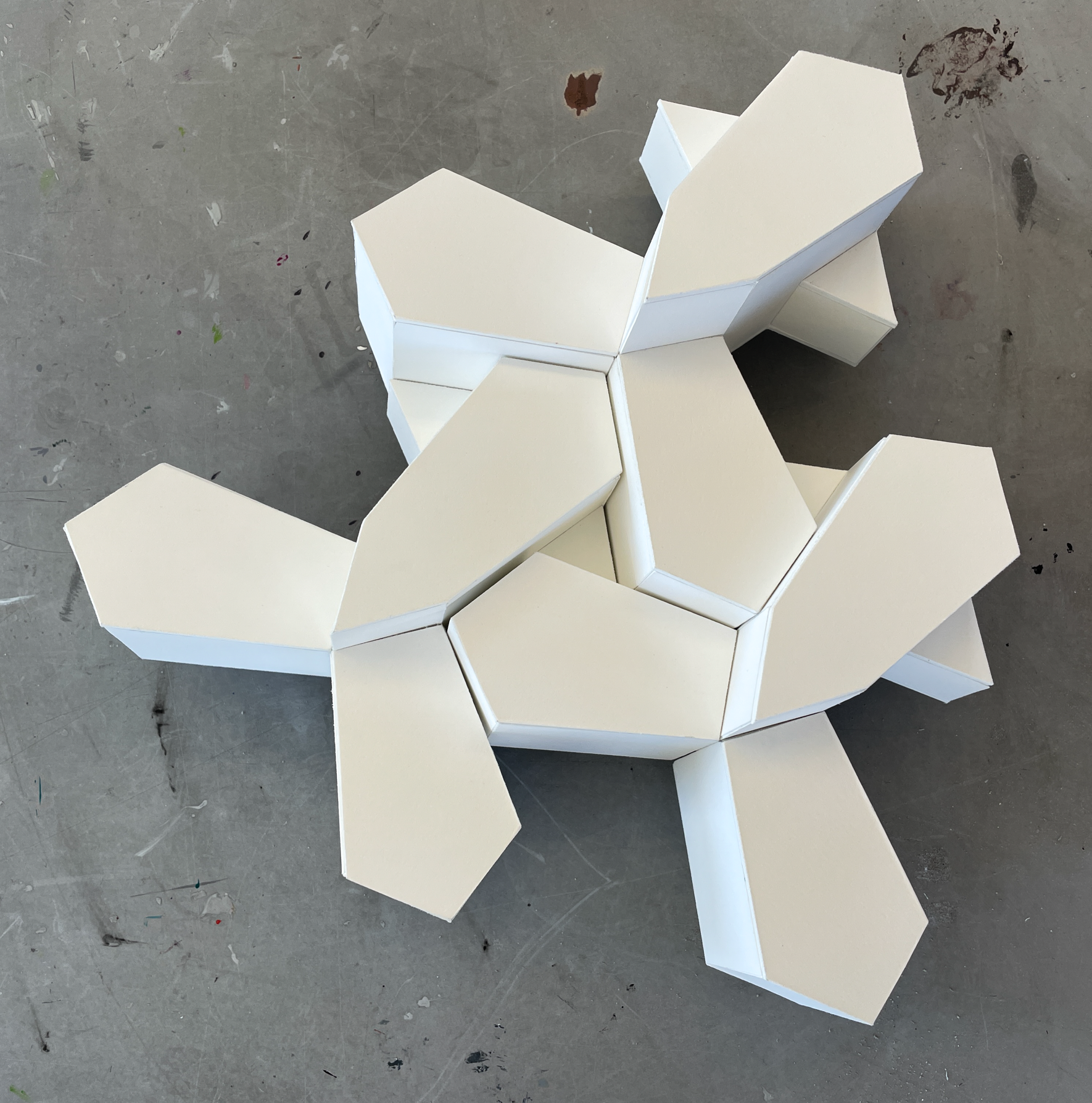
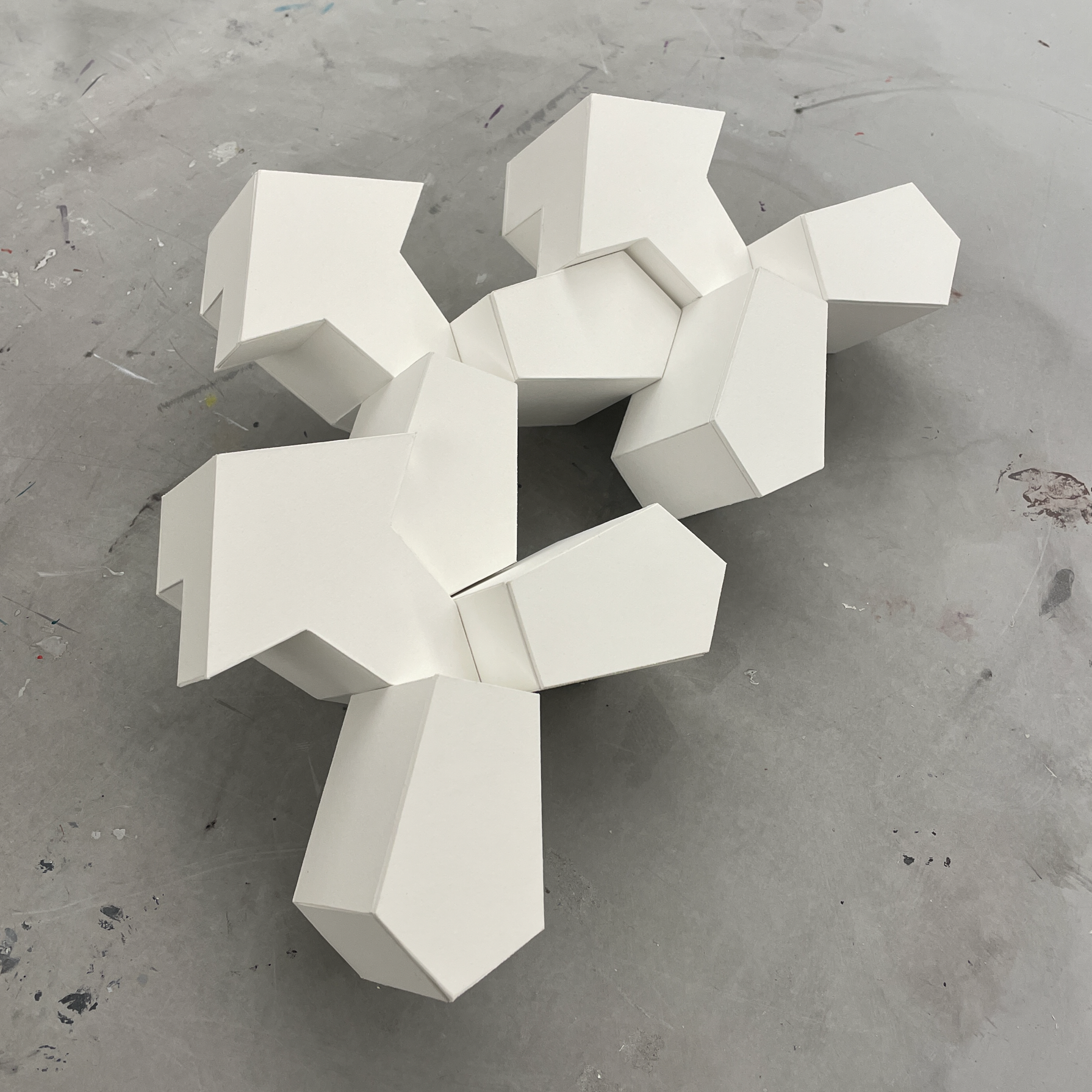
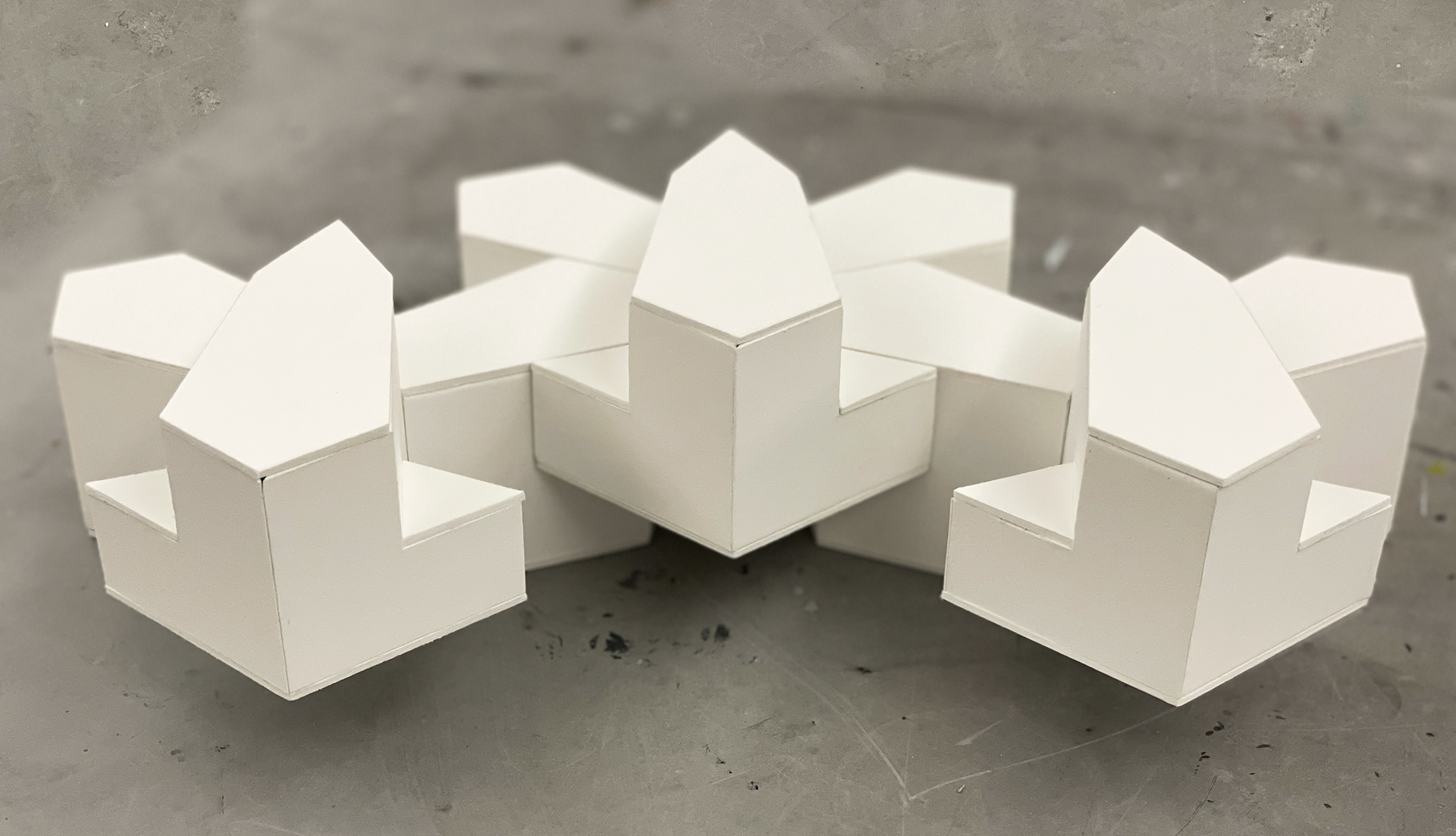
Tessellas
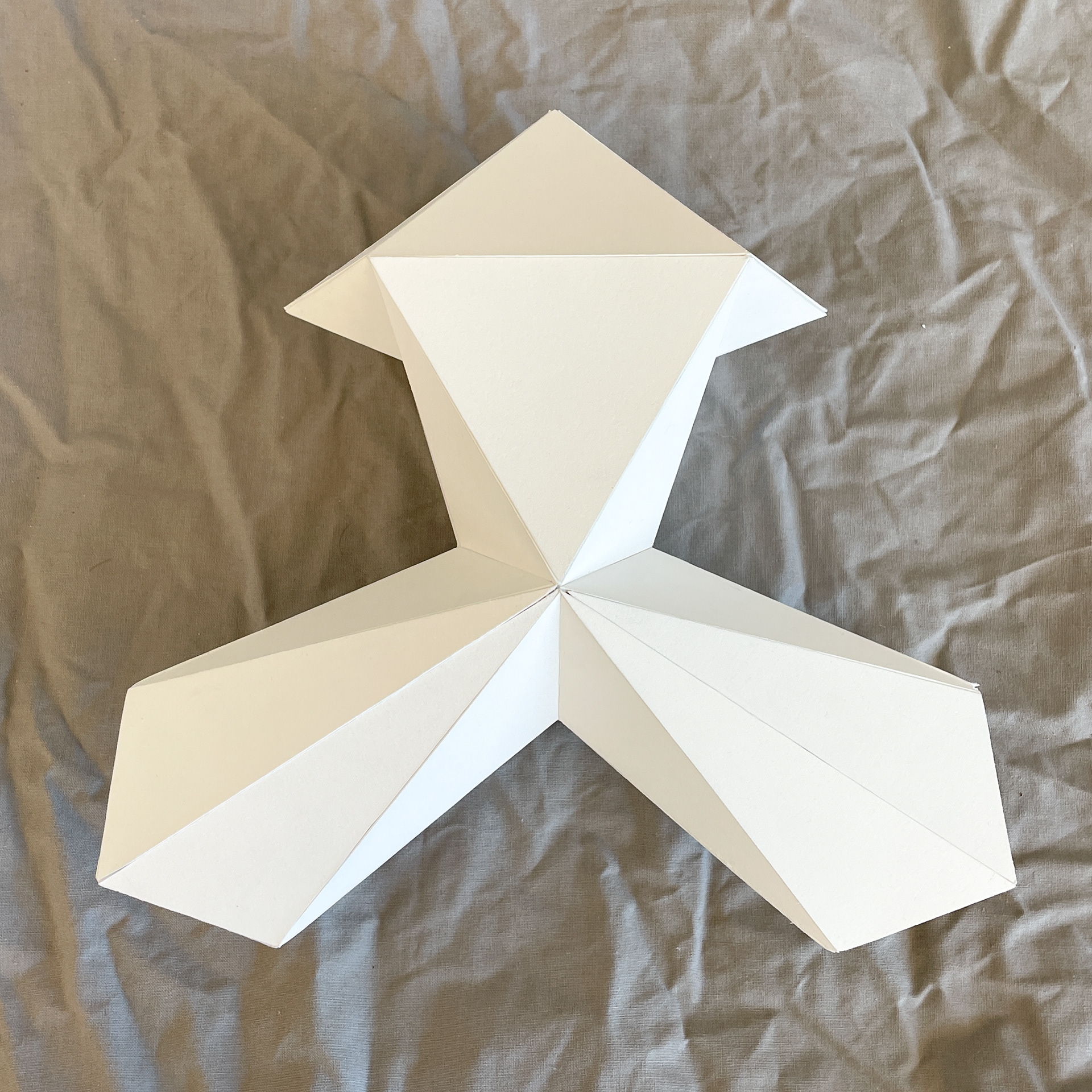
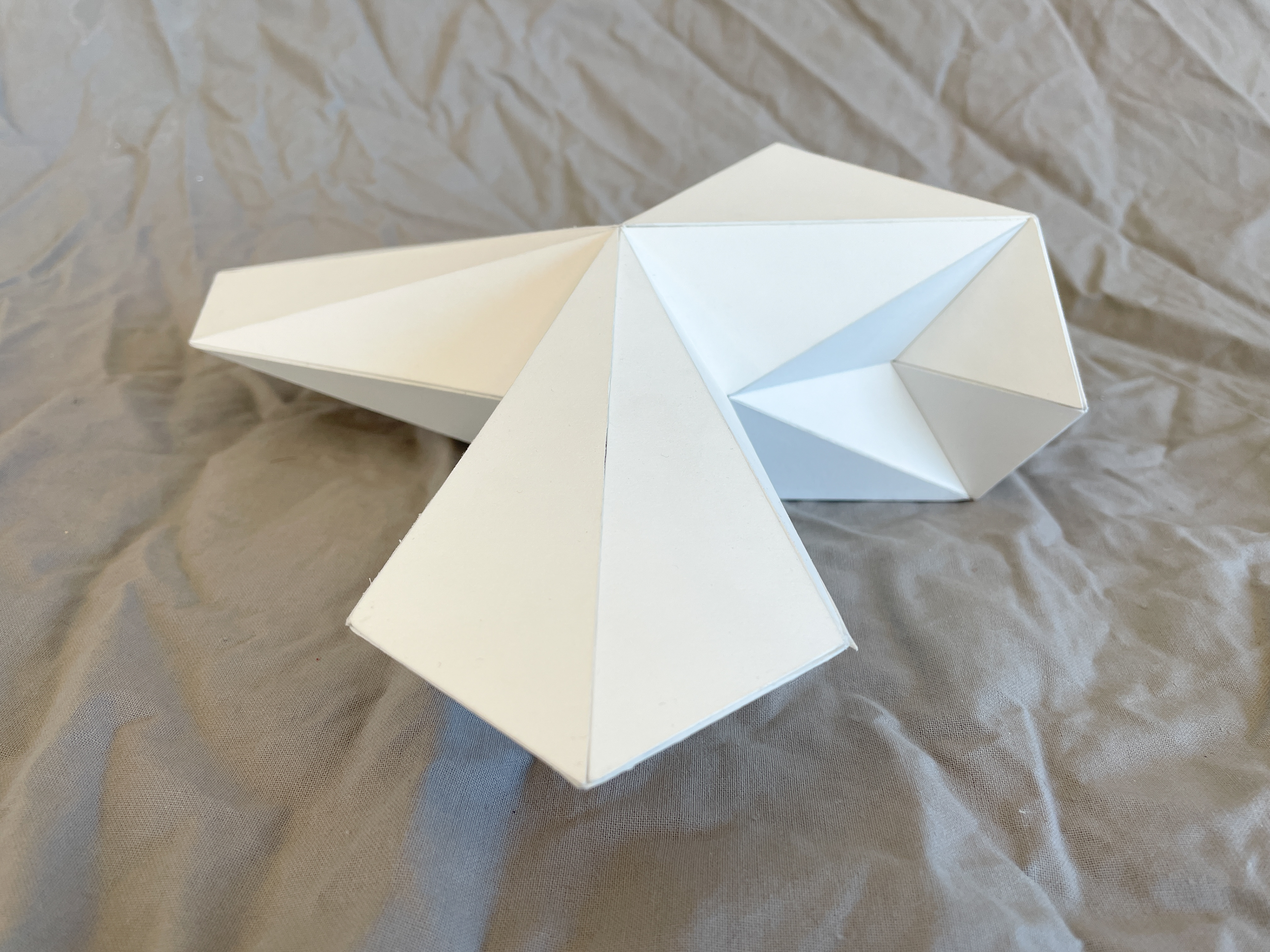
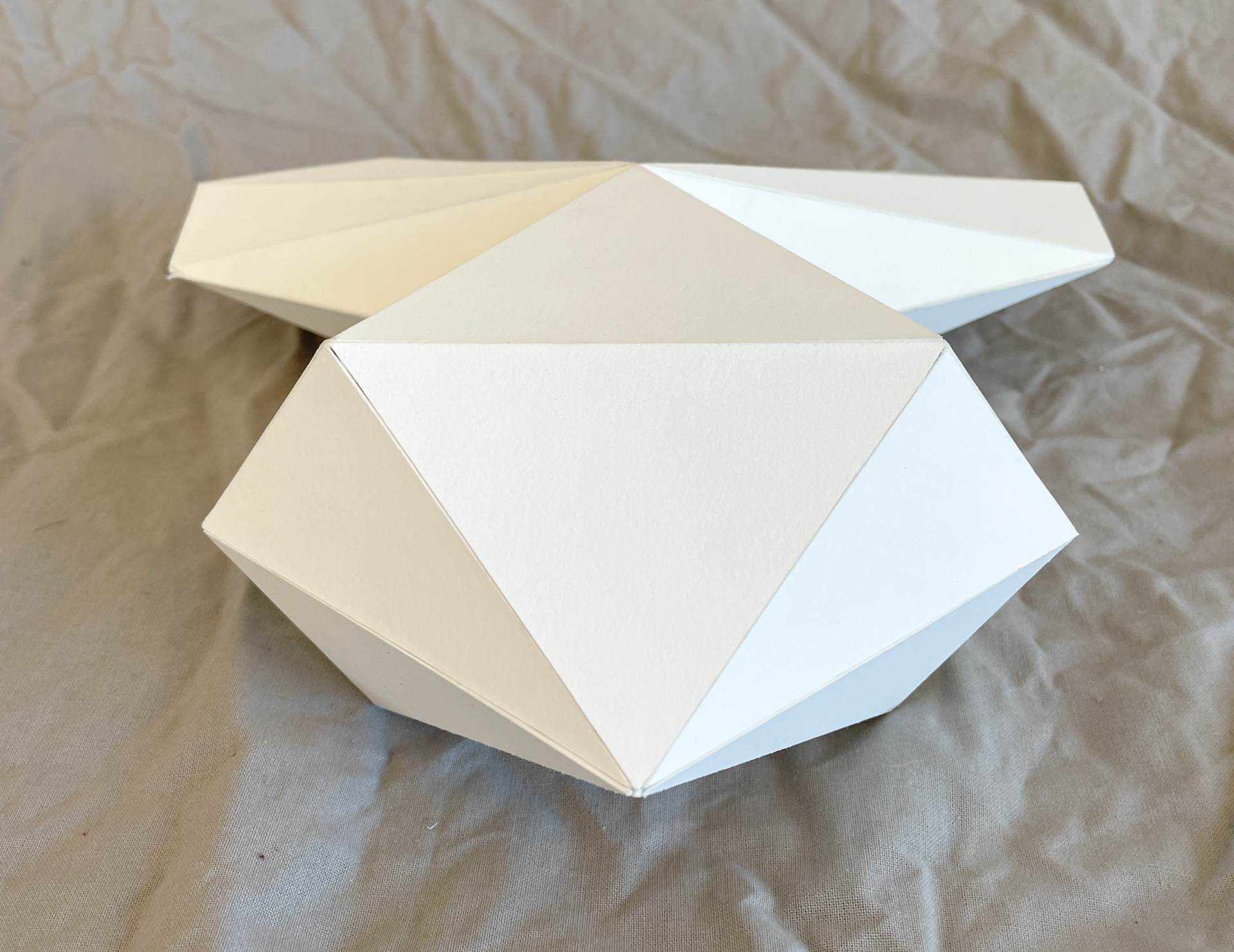
This project was done in order to study how tessellating patterns can be related to one another in three dimensions. I started with a 2D pattern and extruded each of the sides to varying lengths. I then built three identical modules to demonstrate the geometric relationships that can be formed.
- Medium
- Museum board, tacky glue.
- Module dimensions
- 7" × 7" × 3".
A/Propos
Building off of the Tessellas project, the A/Propos project was done in order to further explore geometric relationships, but through a non-orthogonal perspective. For this project, I took the 2D tessellating pattern I used in the Tessellas project, and I put six tetrahedrons over the equilateral triangles that were formed. I then connected the vertices of each of these tetrahedrons to the vertices of the 2D tessellating unit. The model above is the form that resulted from this process.
- Medium
- Museum board, tacky glue.
- Dimensions
- 10" × 10" × 3".
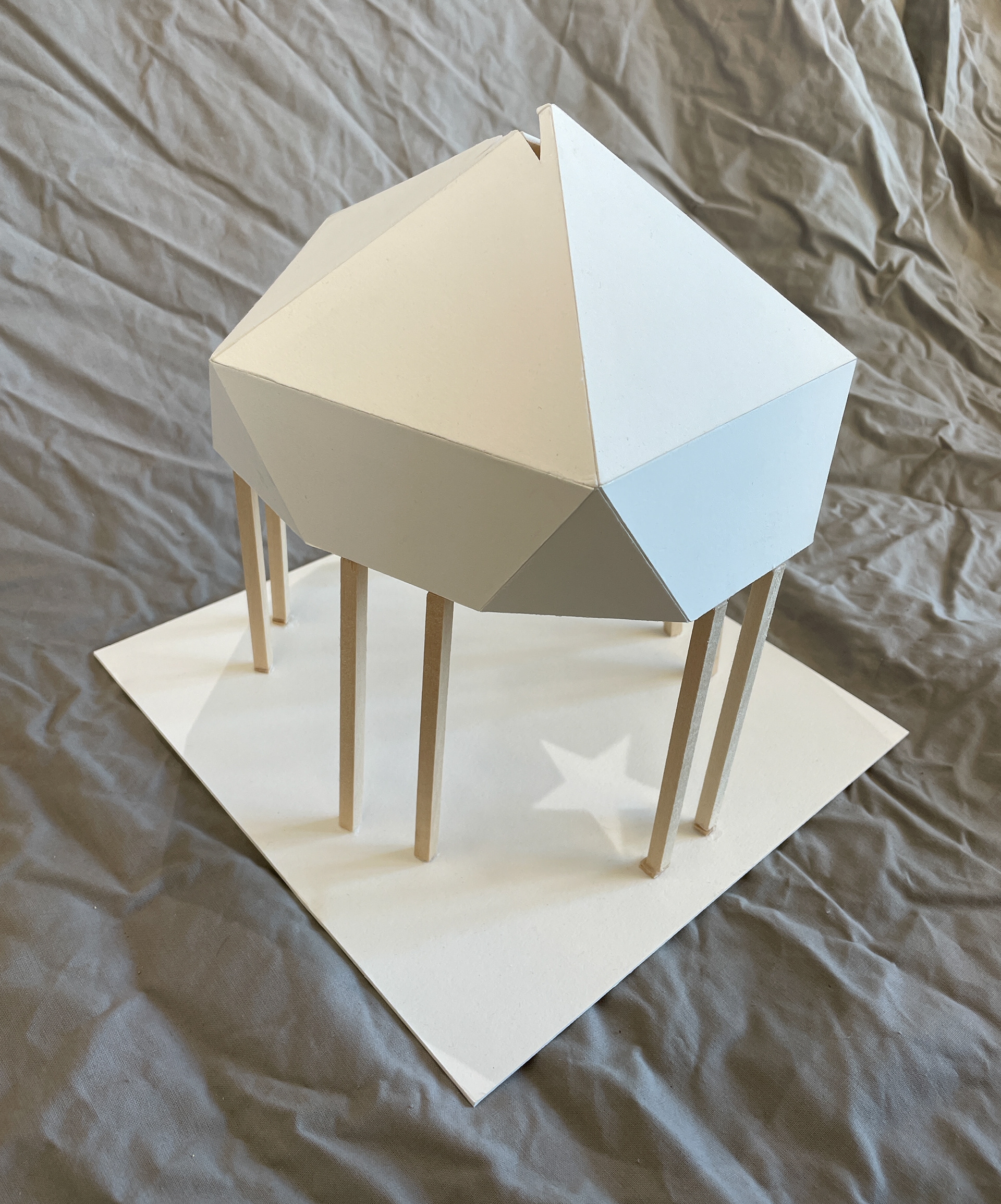
Hallowing Light
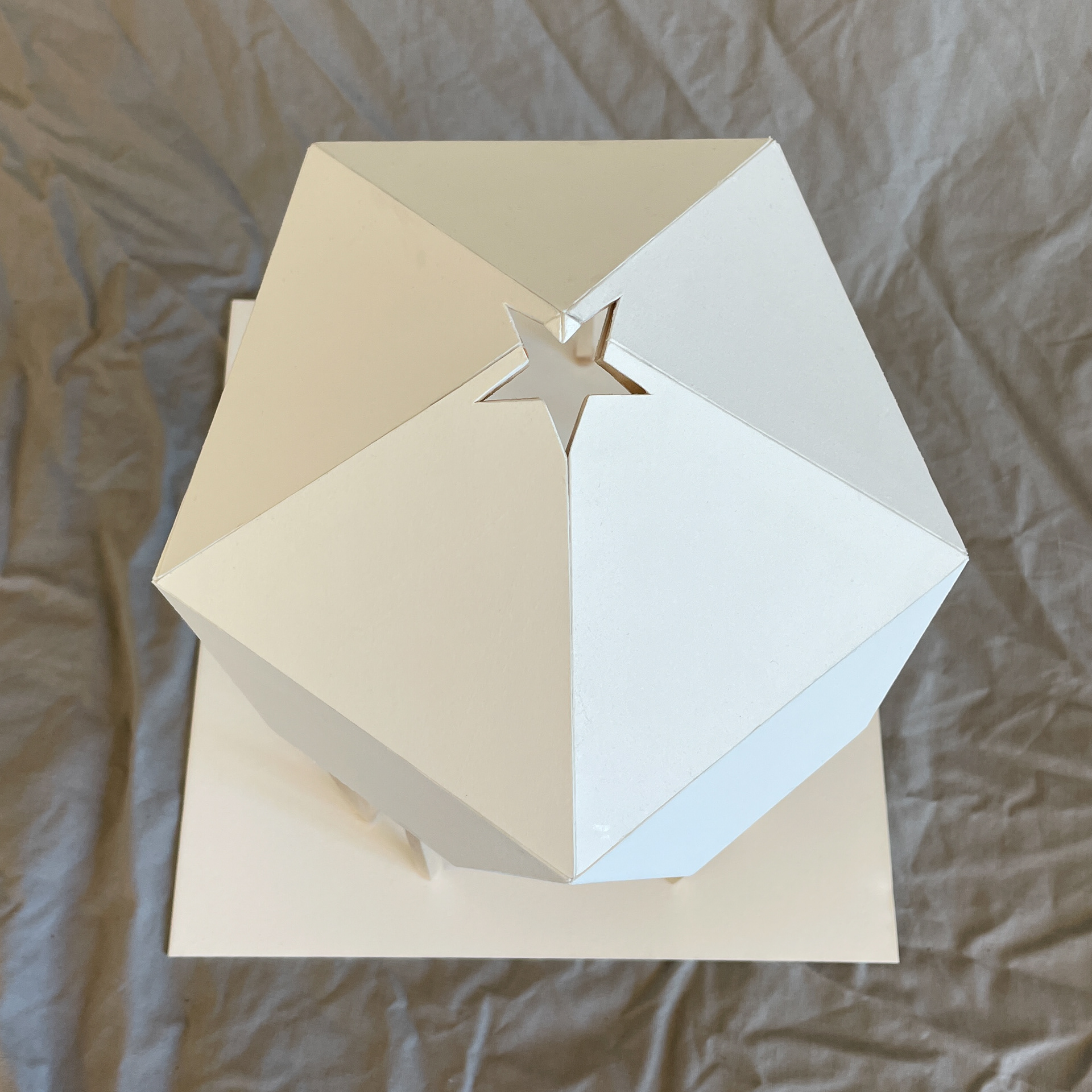
The goal of this project was to build an architectural model based off of a real building with a unique lighting effect. My model was loosely based off of the Pantheon in Rome, but I decided to modify the circular oculus to be a distorted five-point star. The star is distorted such that on May 13th at noon, a perfect five-point star would be projected at the front entrance of the building. I chose May 13th to have this effect because that was the day the building became a church in 609 AD, and I learned that the five-point star is a symbol used to represent the five holy wounds Jesus suffered during his crucifixion.
- Medium
- Museum board, basswood, tacky glue.
- Dimensions
- 10" × 10" × 8".